
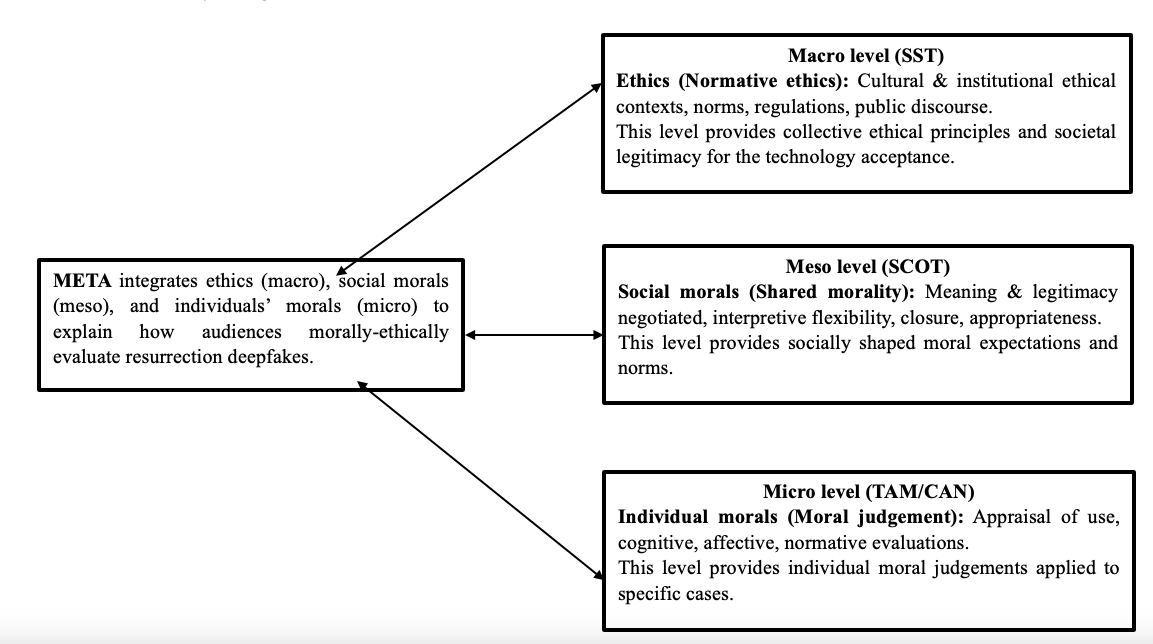
This study introduces the Moral–Ethical Technology Acceptance (META) framework, to examine how moral judgment and ethical reasoning shape responses to emerging technologies. Seventy-five university students reflected on the ethical legitimacy of resurrection deepfakes, and reflexive thematic analysis showed that use was seen as legitimate in three domains: education, emotional or therapeutic benefit, and art. Deepfakes were accepted when transparent, authentic and serving the common or affective good, but rejected when they breached truth, consent or dignity. The findings validate META as a transferable model for analyzing technology acceptance in ethically indeterminate domains such as synthetic media.


 DE_DE
 EN